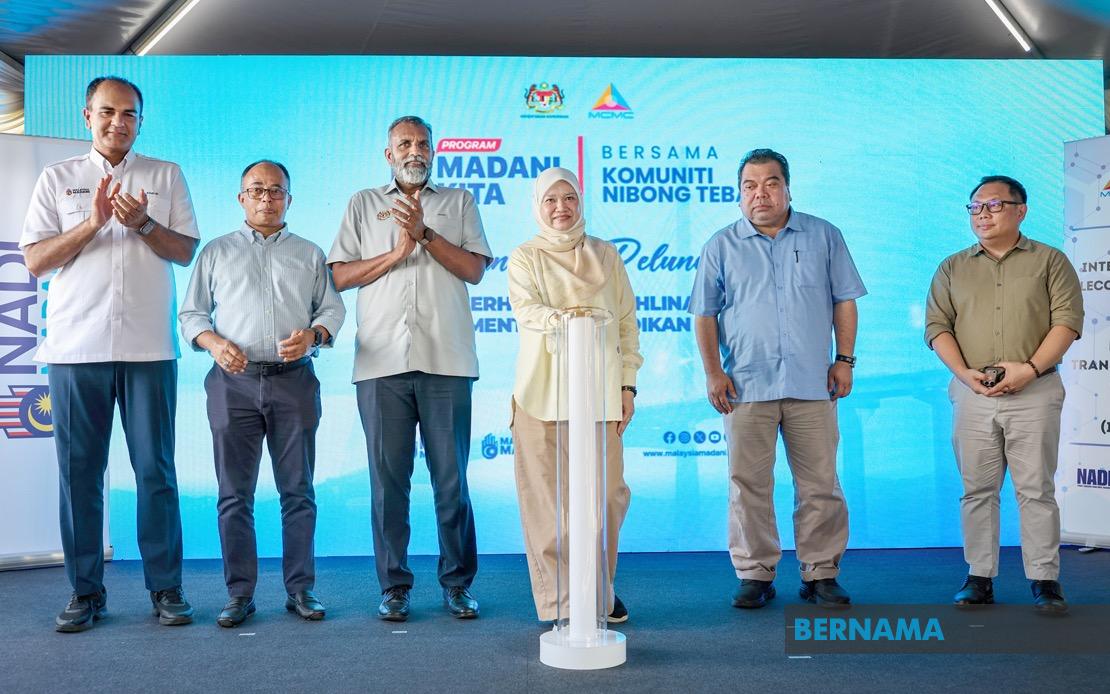
The Malaysian government is deepening its direct engagement with citizens through an expanding network of community outreach initiatives. The Communications Ministry has now conducted 41 MADANI Kita programmes, representing a systematic effort to dissolve the traditional distance between bureaucracy and the public. These events function as mobile service hubs, gathering multiple government departments and agencies in local communities to demonstrate their work, answer citizen concerns, and showcase the practical benefits of government policies beyond mere announcements.
The initiative represents a strategic shift in how Putrajaya communicates with its population. Rather than relying solely on traditional media and official statements, the MADANI Kita approach emphasises experiential engagement—allowing residents to meet government representatives in person, understand available services, and provide direct feedback on issues affecting their communities. This methodology acknowledges a fundamental gap in Malaysia's governance communication: citizens often feel disconnected from policies they hear about but struggle to access or understand in practical terms.
Mano Verabathran, the Communications Ministry's deputy secretary-general for Telecommunications Infrastructure, outlined the programme's scope during the launch of the Nibong Tebal edition, officiated by Education Minister and Nibong Tebal MP Fadhlina Sidek. The MADANI Kita framework operates through a tripartite coordination mechanism involving the Community Communications Department (J-KOM), the Malaysian Information Department (JaPen), and the Malaysian Communications and Multimedia Commission (MCMC), all channelled through the National Information Dissemination Centre (NADI). This institutional architecture ensures consistency while allowing local adaptation to specific community needs.
Beyond information dissemination, these programmes offer a comprehensive range of activities spanning technology, education, skills development, and community welfare initiatives. The organisers have deliberately moved beyond entertainment-focused events, particularly for younger audiences, by integrating talent development opportunities, team-building exercises, and competitive frameworks that promote discipline and healthy engagement. This programming philosophy reflects growing recognition that community outreach must provide tangible value rather than serving as mere publicity exercises.
The inclusion of e-sports programming illustrates the government's attempt to meet citizens where their interests lie. Rather than dismissing digital gaming culture, MADANI Kita has incorporated competitive e-sports platforms, recognising their substantial youth following across Malaysia. This willingness to engage with contemporary leisure preferences represents a modernisation of government outreach strategies, acknowledging that connecting with younger demographics requires meeting them on their preferred platforms and within their cultural interests.
The Permatang Pauh programme, held in conjunction with the Penang International Halal Expo 2026 from July 24 to 26, attracted more than 17,000 participants, demonstrating substantial public interest when government services are presented in accessible, integrated settings. This participation level suggests that citizens welcome opportunities for direct government engagement when properly promoted and contextualised within broader community events. The success of the Permatang Pauh iteration provides a blueprint for scaling the initiative—anchoring MADANI Kita programmes within existing popular events amplifies reach and foot traffic while providing multiple layers of community benefit.
From a communications perspective, the MADANI Kita strategy addresses a critical credibility challenge facing Malaysian governance. When citizens experience government services only through bureaucratic channels or media reports, their understanding remains abstract and often sceptical. Direct exposure to public servants, tangible demonstrations of government programmes, and opportunities to ask questions in informal settings build trust more effectively than official statements. The programme thus functions as a two-way communication channel rather than a government-to-public broadcast mechanism.
The emphasis on direct dialogue reveals implicit acknowledgment that policy communication alone proves insufficient in modern governance. Citizens increasingly demand experiential confirmation—they want to understand not just what government intends to accomplish, but how those intentions translate into observable community benefits. MADANI Kita attempts to bridge this perception gap by showcasing concrete government activities alongside policy explanations, allowing participants to verify government claims through direct observation.
For regional observers, Malaysia's approach offers lessons for Southeast Asian governance structures grappling with similar public engagement challenges. Countries across the region face citizen demands for greater government accountability and accessibility, yet many rely on outdated communication mechanisms. Malaysia's systematic deployment of mobile government service centres suggests that sustained, coordinated outreach programmes can meaningfully improve public perception and understanding of government initiatives when properly resourced and institutionalised.
The scale of the initiative—spanning 41 programmes with tens of thousands of participants—indicates substantial government commitment to this communication philosophy. Rather than treating community engagement as ad-hoc publicity, the Communications Ministry has embedded these programmes within permanent institutional structures, suggesting expectation of continuation and expansion. This institutionalisation distinguishes MADANI Kita from temporary campaigns, positioning it as part of Malaysia's ongoing governance infrastructure.
The programme's success ultimately depends on whether participating agencies translate direct engagement into improved service delivery. Citizens who attend MADANI Kita events and identify specific issues will assess government effectiveness based on subsequent responsiveness. The communications initiative thus creates accountability mechanisms—public representatives must follow through on commitments made during face-to-face interactions, or risk damage to government credibility in these communities.
Looking forward, the expansion of MADANI Kita to 41 programmes and potentially beyond suggests growing recognition within Malaysian governance that public trust requires continuous, deliberate cultivation. In an environment where citizens encounter government primarily through complaints and complaints rather than positive interactions, strategic outreach programmes that demonstrate government presence, accessibility, and responsiveness serve essential legitimacy functions. Whether MADANI Kita ultimately transforms citizen-government relations will depend on consistency of execution and government willingness to act on the feedback and concerns raised during these community engagements.

