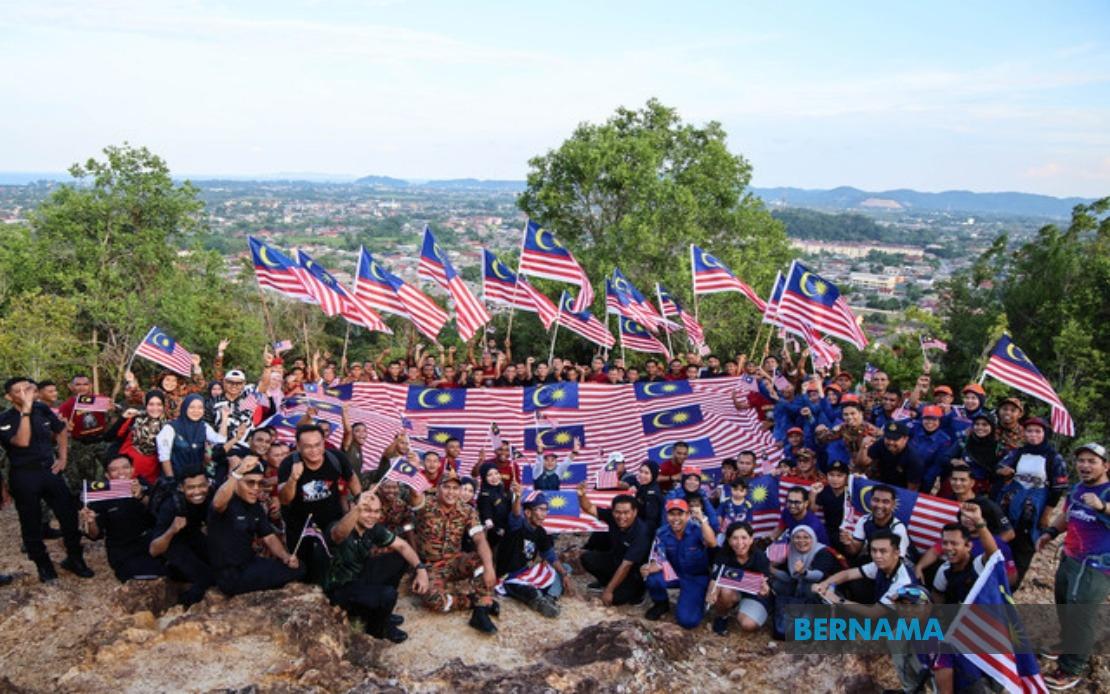
In an effort to commemorate the nation's National Month, over 300 participants representing uniformed services, government agencies and the media converged in Kuala Terengganu for a coordinated summit hike aimed at reinforcing patriotic values across the state. The inaugural event, which took place in August, drew personnel from diverse organisations working in law enforcement, public safety and governance, demonstrating a comprehensive approach to celebrating Malaysia's independence through collective civic engagement.
The ambitious gathering was orchestrated by METRA, a professional association for media practitioners, with the explicit intention of channelling patriotic sentiment into meaningful action. According to METRA president Mohd Zaid Mohd Noor, the event represented a deliberate strategy to leverage the communication platforms and networks available to journalists for disseminating messages of national pride throughout Terengganu society. By positioning media professionals as catalysts for patriotic expression, the initiative acknowledged the influential role that journalists play in shaping public discourse around national identity and civic responsibility.
The participating organisations reflected the breadth of Malaysia's public sector infrastructure. The contingent included members from the Terengganu Fire and Rescue Department, demonstrating the commitment of emergency responders to national celebrations despite their typically demanding operational schedules. The Malaysian Armed Forces contributed personnel, underscoring the military's role in safeguarding national sovereignty during commemorative periods. Traffic and transport authorities, represented by the Road Transport Department, joined alongside the Malaysian Anti-Corruption Commission, signalling cross-sector recognition of the importance of maintaining integrity in public service as a foundation for national strength.
State-level agencies also featured prominently in the assembly. The Terengganu Ministry of Domestic Trade and Cost of Living participated, alongside the Royal Malaysian Customs Department, reflecting the involvement of economic and revenue protection bodies in the patriotic exercise. The Malaysia Civil Defence Force rounded out the representation, bringing expertise in civilian preparedness and emergency management to the gathering. This comprehensive roster of organisations illustrated how National Month celebrations could transcend ceremonial performances to become practical opportunities for inter-agency relationship building.
Mohd Zaid articulated a dual purpose underlying the summit hike. Beyond its immediate function as a National Month activity, the event served as a deliberate mechanism for fortifying working relationships between different government agencies that often operate in parallel structures. The informal setting of a mountain climb, requiring physical exertion and shared challenge, created conditions where personnel from separate hierarchies could interact as fellow citizens united by common purpose. Such informal networking occasions frequently prove more effective than formal conferences in breaking down institutional silos and fostering genuine collegial bonds across bureaucratic boundaries.
The patriotic dimension of the event was not merely symbolic. Mohd Zaid indicated that the climb culminated in the unfurling of a large flag at the summit—a moment designed to crystallise the collective patriotism of the assembled participants and create a visual statement of national unity. This staging reflected deliberate choreography to transform a physical activity into a political and cultural statement, with media coverage ensuring that the symbolic gesture extended beyond the several hundred individuals present to reach a broader Terengganu audience.
For Malaysia's journalism community, the METRA initiative represented an active assertion of media's social responsibility beyond reporting. Rather than confining themselves to the observer role that journalism conventions often prescribe, the participating media practitioners and their organisation chose to become agents in promoting patriotic values directly. This boundary-crossing approach—where journalists actively organise civic activities rather than simply chronicling events organised by others—reflects broader global trends in which media organisations increasingly position themselves as civic stakeholders rather than neutral outsiders.
The emphasis on physical health and wellness integrated into the patriotic messaging reveals shifting conceptions of National Month celebrations in Malaysia. Traditional commemorations have emphasised historical narrative, political rhetoric and symbolic ceremony. By anchoring the patriotic message to healthy lifestyle practices, the METRA event implicitly connected national pride to contemporary concerns about public health and individual fitness. This fusion acknowledged that patriotism in modern society increasingly encompasses responsibility for personal and community wellbeing, not merely historical consciousness.
For Terengganu specifically, the August timing and local coordination ensured that National Month celebrations extended throughout the state beyond the typical concentration of major events in Kuala Lumpur. Provincial participation in Independence Month activities, particularly when involving security and enforcement agencies, reinforces national cohesion by ensuring that patriotic messaging reaches beyond the federal capital. This geographical distribution of commemorative activities helped diffuse national sentiment across Malaysia's peninsular and East Malaysian territories.
The successful mobilisation of 300 participants across multiple institutions suggests that patriotic civic engagement remains a motivating force within Malaysia's government sector. Despite economic pressures and organisational pressures on public servants, the willingness to dedicate time to collective patriotic expression indicated that National Month messaging still resonates with officials and security personnel. Whether such sentiment translates into sustained institutional cooperation beyond the event itself remains an open question for Malaysian governance observers.

