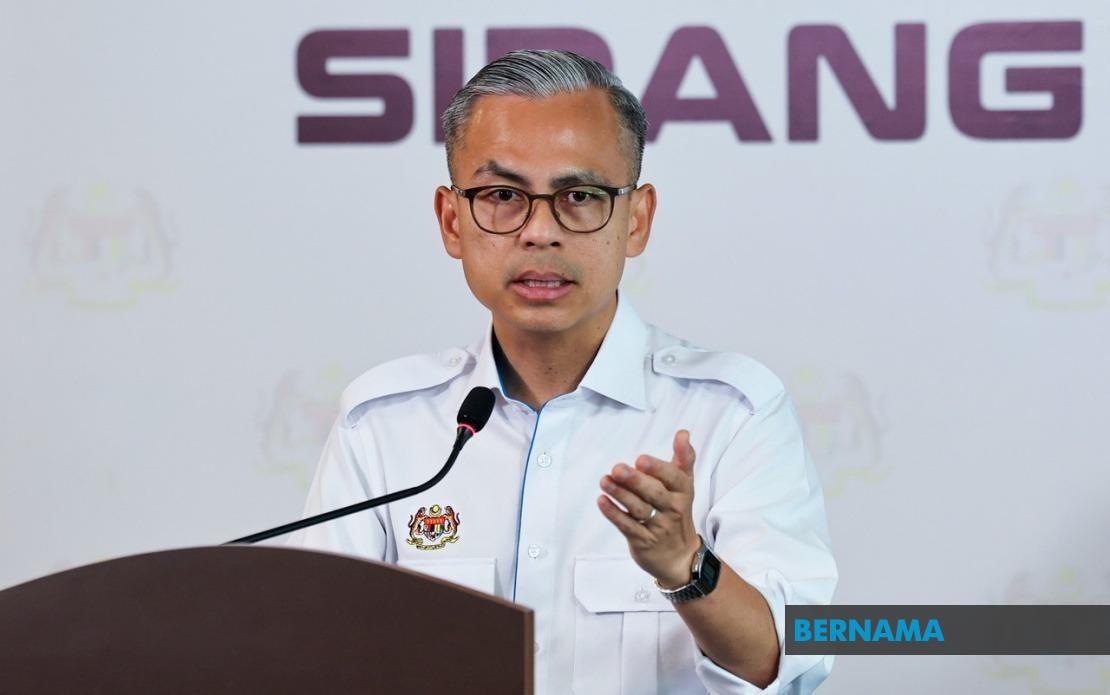
The 2026 National Day parade taking shape at Dataran Putrajaya stands on the cusp of full operational readiness, with Communications Minister Datuk Seri Fahmi Fadzil declaring that final preparations should reach nearly complete status following tomorrow's comprehensive dress rehearsal. Speaking in Putrajaya on August 28, Fahmi, who chairs the Main Committee overseeing both National Day and Malaysia Day celebrations, outlined a streamlined vision for the marquee event that combines logistical precision with innovative ceremonial elements never before seen in Malaysia's Independence Day observances.
The remaining work focuses on refinement rather than foundational reconstruction. Fahmi highlighted that organisers are tightening the spatial choreography between parade contingents, whose current formations contain gaps that fall short of the seamless visual impact intended for the final spectacle. These adjustments represent the final layer of polish needed to transform a functional military and civic pageant into a coordinated national statement. The minister's confidence in tomorrow's full-scale rehearsal reflects weeks of meticulous planning and multiple trial runs that have progressively addressed technical and human factors.
Weather has proven a cooperative partner in the preparation process. Conditions during today's rehearsal remained favourable, allowing ground crews, marching units, and human graphics performers to execute their movements without climatic disruptions that could otherwise mask procedural weaknesses. The benign meteorological environment enabled organisers to assess timing, spacing, and transition sequences with clarity that poor weather would have obscured. This fortunate circumstance has compressed the learning curve, though final adjustments planned for tomorrow will stress-test the entire system across all contingencies.
The human element has exceeded expectations, according to Fahmi's assessment. Security personnel, school students drawn from three states, and other participating groups have demonstrated enthusiasm and discipline that bolsters confidence in execution. The morale evident during rehearsals suggests that when the actual parade unfolds, participants will bring genuine energy rather than mechanical compliance. This psychological factor often separates memorable national celebrations from forgettable procedural exercises, and early indicators suggest the 2026 event will resonate beyond the immediate audience.
Several components mark this year's celebration as a departure from tradition. The Johor Military Force will make its inaugural appearance in a National Day parade, reflecting evolving security architecture and regional representation. Equally significant is the inclusion of the Ibrahim-class boat, a maritime asset personally designed by His Majesty Sultan Ibrahim, King of Malaysia. This vessel represents not merely ceremonial innovation but also a tangible symbol of royal engagement with contemporary defence and national symbolism. Such elements elevate the parade beyond routine annual observance into a showcase of institutional renewal and royal patronage.
The human graphics performance anchoring the visual centrepiece of the celebration incorporates 1,500 students positioned on a multi-level structure engineered to accommodate their coordinated movements. Putrajaya Corporation has conducted thorough safety assessments validating the structure's integrity and permitted tolerance levels. The minor oscillation observers may notice during performances falls well within engineering specifications designed to allow rhythmic movement without compromising participant safety. This represents the third iteration of this structural configuration, with no incidents in previous applications providing historical validation of the design.
The structure's slightly asymmetrical positioning has sparked minor criticism, a situation Fahmi addressed with technical candour. The parade route and the Putrajaya Corporation building occupy different spatial axes, a fundamental geometric constraint that influences how the student formation appears from certain viewing angles. Additionally, this year's decision to reduce participant numbers from 2,000 to 1,500 altered the footprint and visual geometry. Rather than dismissing public perception concerns, Fahmi has instructed organisers to review technical refinements for future celebrations, signalling responsiveness to optics alongside operational substance.
The Malaysian context for such meticulous preparation extends beyond ceremonial convention. National Day parades serve as periodic affirmations of institutional capacity and national cohesion, particularly in an era when public cynicism toward governmental capability has risen. A flawlessly executed spectacle involving thousands of participants, complex logistics, and multifaceted coordination transmits confidence in administrative competence and unified national purpose. For a regional audience observing Malaysian governance from external vantage points, such displays carry subtle diplomatic weight.
The involvement of Fahmi in both ministerial capacity and committee leadership reflects the political significance attached to this celebration. Communications portfolios encompass not merely information dissemination but also symbolic management of national narratives. By personally overseeing preparations and offering detailed technical explanations to media, Fahmi positions the government as transparent, detail-conscious, and invested in public satisfaction. This granular engagement contrasts with distant delegation and sends organisational signals throughout the bureaucratic hierarchy.
Looking forward, tomorrow's comprehensive rehearsal will determine whether tomorrow's confident assessment proves justified. The dress rehearsal functions as a final examination before the actual performance, revealing weaknesses that escaped notice during partial drills while validating approaches that sceptics questioned. Success tomorrow essentially guarantees successful execution during the actual parade, assuming no weather disruptions or unforeseen circumstances intervene. The statement of near-completion suggests organisers are preparing for announcement of final readiness status imminently.
For Southeast Asian observers and international visitors, Malaysia's National Day parade demonstrates a region capable of orchestrating complex civic ceremonies that blend tradition with contemporary symbolism. The inclusion of royal-designed maritime assets and new military participation signals institutional evolution within stability. The meticulous preparation evident in Fahmi's reporting suggests that regardless of minor visual asymmetries or technical refinements, the 2026 celebration will unfold as intended, affirming Malaysia's capacity for organised national expression.

