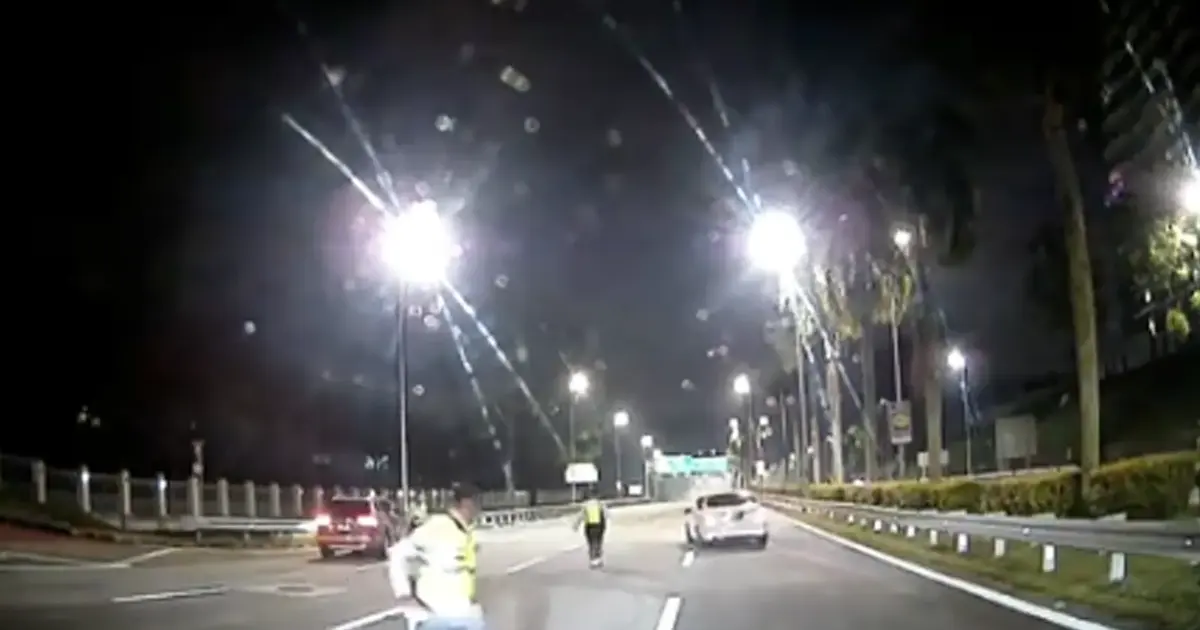
A 20-year-old motorist was apprehended following an incident at a police roadblock where he deliberately drove through the checkpoint despite officers' attempts to stop him. The arrest came after the man exhibited signs of anxiety and proceeded to breach the controlled cordon, prompting immediate police intervention.
The driver's behaviour at the checkpoint caught the attention of patrolling officers who were conducting routine vehicle inspections. His evident nervousness and subsequent decision to accelerate through the roadblock rather than comply with standard procedures escalated what would ordinarily be a routine traffic stop into an enforcement action.
Failure to comply with a police officer's lawful orders constitutes a serious breach of traffic regulations in Malaysia. This particular incident underscores the importance of roadblocks in maintaining public safety and security, as these checkpoints serve multiple functions including vehicle safety verification, document inspection, and intelligence gathering to prevent criminal activity.
Roadblocks remain a critical enforcement tool for Malaysian police, particularly in urban and highway corridors where traffic volume is substantial. Officers conducting these operations are trained to assess vehicle occupants and identify potential risk factors, making cooperation from drivers essential to both efficient processing and officer safety.
The apparent nervousness exhibited by the driver may have triggered heightened scrutiny from checkpoint officers, though such displays do not automatically indicate criminal intent. However, when combined with the act of forcing through a roadblock, it provided grounds for the police to pursue the matter further and take the individual into custody.
Motor vehicle offences of this nature carry implications beyond simple traffic violations. Deliberately circumventing police authority at a checkpoint can result in charges that extend into more serious categories depending on the circumstances and jurisdiction, potentially affecting employment prospects, insurance ratings, and driving privileges.
The Mercedes in question has been secured as evidence, with police likely examining the vehicle for mechanical fitness, documentation validity, and any other factors that may have prompted the driver's apparent anxiety or desire to avoid the checkpoint. Such investigations often reveal whether the evasion was motivated by vehicle-related infractions or more serious concerns.
For Malaysian motorists, the lesson is clear: roadblocks are non-negotiable traffic control measures, and attempting to bypass them creates far greater legal exposure than simply stopping and cooperating. The consequences of non-compliance can quickly escalate from minor traffic infractions to criminal charges, particularly when force or deliberate evasion is involved.
This arrest also reinforces the risks officers face during roadblock operations. When drivers refuse to comply, situations can rapidly become unpredictable and potentially dangerous. Police training for roadblock operations emphasizes safety protocols precisely because of incidents like this one, where driver behaviour becomes erratic.
The incident reflects broader concerns about road discipline in Malaysia, where enforcement of traffic regulations remains an ongoing challenge for authorities. Public compliance with police instructions at checkpoints is essential for maintaining the effectiveness of these operations and protecting both officers and the motoring public.
As the case proceeds through the judicial system, it will likely serve as a reminder to other motorists about the serious consequences of ignoring police authority. Courts typically treat such cases seriously, viewing them as challenges to law enforcement capacity and public safety infrastructure.
Roadblocks will continue to be a fixture of Malaysian traffic management and security operations. Drivers are advised to approach checkpoints with proper documentation, maintain their composure, and comply fully with officer instructions to avoid legal complications and ensure swift passage through these control points.

