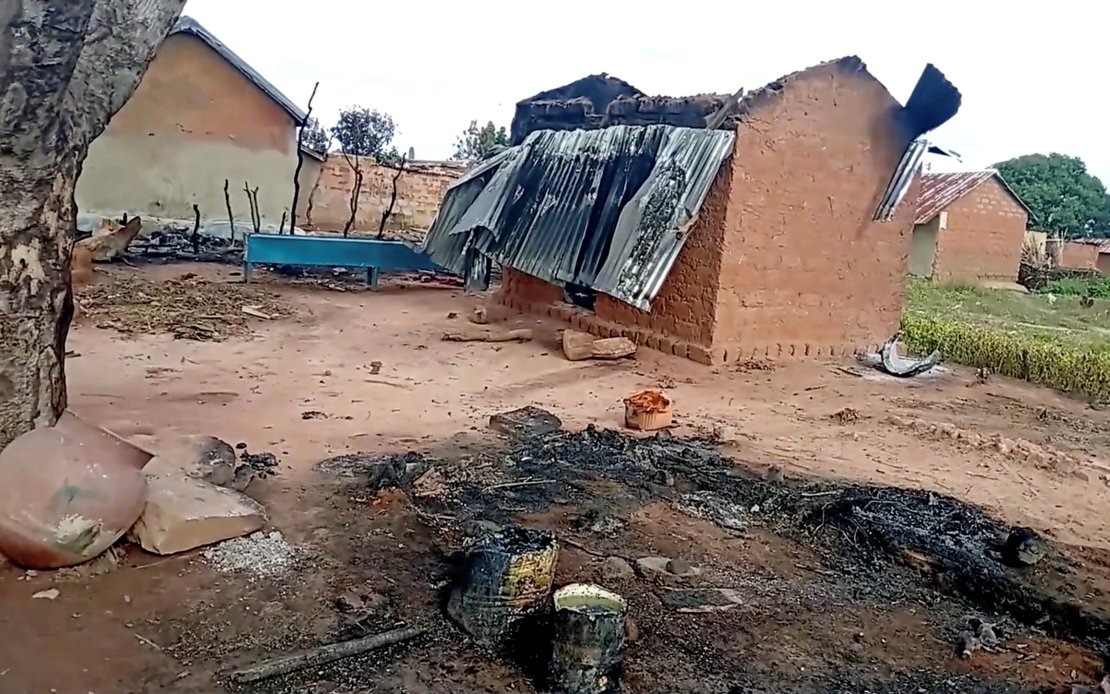
Niger's Defence and Security Forces suffered significant casualties on Sunday when militants launched a coordinated assault against a military detachment stationed in the Tera area of the country's western Tillabery region. The attack resulted in at least 16 soldiers killed and a further 23 wounded, according to statements from the Nigerien Ministry of Defence. The incident underscores the deteriorating security environment across the Sahel, where jihadist networks and armed militant groups maintain a persistent presence across porous borders.
The Tillabery region, which sits at the convergence of Niger, Mali, and Burkina Faso, has emerged as a critical flashpoint for regional instability. This tri-border area has become increasingly difficult for national militaries to police, as militant organisations exploit the sparse population density and limited government presence to plan and execute cross-border operations. The geographic position renders conventional military responses challenging, as armed groups can retreat across international boundaries to regroup and rearm before mounting fresh attacks.
According to the Nigerien Ministry of Defence, the military response proved forceful enough to repel the initial assault. Fifteen militants were killed during the engagement, while security forces recovered five motorcycles seized during the confrontation and destroyed four additional vehicles. The statement emphasised that air support played a crucial role in turning the tide of the battle, suggesting that Niger's aerial capabilities, likely provided through international military partnerships, gave government forces a decisive advantage that ground forces alone might not have achieved.
The ministry indicated that defensive operations remained ongoing in the aftermath of the attack, with search and sweep missions continuing throughout the affected area. These follow-up operations typically aim to disrupt remaining militant networks, recover wounded combatants or sympathisers, and gather intelligence on the attacking force's composition, equipment, and intended objectives. Such sustained military pressure forms part of broader counter-terrorism doctrine designed to deny militants freedom of manoeuvre and safe havens within Niger's territory.
The attack reflects a troubling pattern across the broader Sahel region, where multiple militant organisations—including ISIS-affiliated groups, Al-Qaeda franchises, and independent jihadist movements—compete for territory and influence. Niger has faced particularly intense pressure from these networks, with attacks on military positions, administrative centres, and civilian settlements occurring with disturbing regularity. The casualty toll of sixteen deaths represents a substantial loss of trained military personnel and underscores the human cost of the region's protracted security crisis.
International observers have linked the escalating violence in the Sahel to broader geopolitical shifts in West Africa. Recent military coups in Mali, Burkina Faso, and Guinea have disrupted regional security architectures and complicated coordinated responses to militant activity. The withdrawal of French military forces from the region and shifting international military partnerships have created security vacuums that militant organisations have exploited. Niger's continued reliance on external military support—whether from the United States, France, or other partners—reflects the resource constraints facing Sahelian nations attempting to counter well-armed and mobile militant networks.
The targeting of military detachments represents a deliberate strategy by jihadist organisations to undermine state authority and demonstrate the government's inability to protect its own forces. By inflicting casualties on uniformed personnel, militant groups seek to demoralise the armed forces, discourage recruitment, and erode public confidence in the state's capacity to provide security. The psychological impact of such attacks often extends beyond the immediate tactical consequences, rippling through military ranks and civilian populations alike.
For Malaysia and other Southeast Asian nations with strategic interests in regional stability, the Sahel crisis carries important implications. The region's instability has attracted international attention from powers competing for African influence, while also serving as a recruitment and training ground for transnational jihadist movements. The lessons from Niger's security challenges—particularly regarding border control, intelligence sharing, and counter-terrorism coordination—remain relevant to Southeast Asian security establishments grappling with similar challenges in maritime and terrestrial border zones.
The continued deterioration of security in Niger's borderlands suggests that military responses alone will prove insufficient without complementary political, economic, and social interventions. The underlying grievances that fuel militant recruitment—including poverty, unemployment, weak governance, and ethnic tensions—require sustained attention from both national governments and the international community. Without addressing these root causes alongside military counter-terrorism operations, the cycle of violence in the Sahel appears likely to persist for the foreseeable future.

