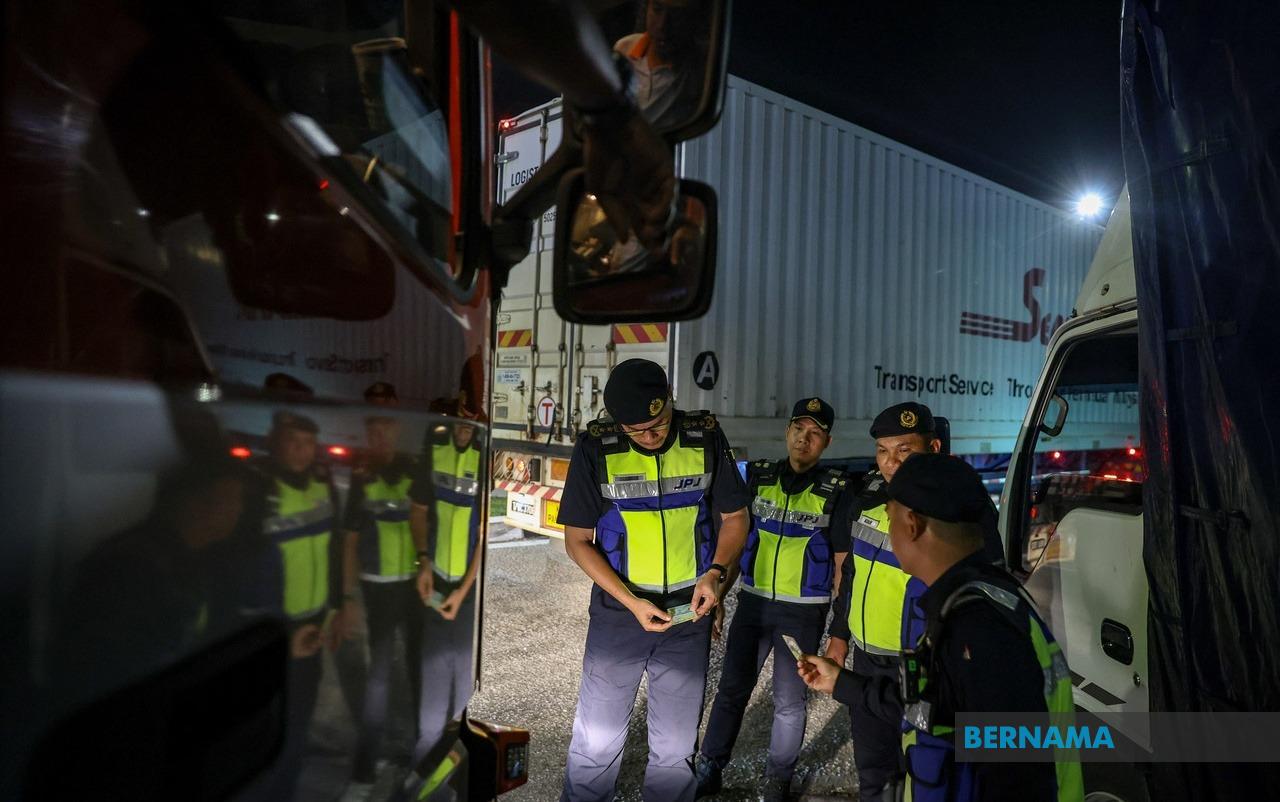
A coordinated drug-testing operation across Johor has exposed substance abuse among commercial vehicle operators, highlighting ongoing concerns about impaired driving on Malaysian highways. Between July 1 and July 10, the Johor Road Transport Department jointly conducted screening exercises with police, anti-narcotics agencies, and the national tollway operator, identifying 16 drivers with positive drug results from a pool of 164 tested individuals.
Johor JPJ director Zulkarnain Yasin disclosed the findings during a briefing at the Pagoh rest and service area, describing a comprehensive enforcement initiative that targeted strategic locations throughout the state. The operation deployed teams at highway rest areas, JPJ enforcement stations, and bus terminals—locations chosen specifically for their traffic throughput and accessibility to the travelling public. This spatial distribution allowed authorities to cast a wide net across different vehicle types and driver populations, from interstate trucking operations to scheduled public transport services.
The breakdown of positive results reveals the breadth of drug accessibility among transport workers. Methamphetamine emerged as the most commonly detected substance, identified in seven cases. Three drivers tested positive for crystal methamphetamine, commonly known as "ice" on the street, while two were found with ganja and one with morphine. These figures underscore how synthetic stimulants remain prevalent within professional driving circles, likely due to their perceived capacity to combat fatigue during long-haul operations—a dangerous misconception that puts road users at serious risk.
The implications extend beyond individual health concerns. Commercial drivers operate vehicles that carry freight, cargo, and passengers, meaning their impairment directly endangers third parties. A truck driver or bus operator under the influence represents a cascading liability: loss of reaction time, impaired judgment, and diminished vehicle control translate into potential highway disasters. Malaysia's road fatality statistics consistently rank among Asia's worst, and substance abuse among professional drivers constitutes an often-overlooked but critical contributing factor to this tragic toll.
Responding to the findings, the Road Transport Department announced it would pursue suspension or revocation of professional vocational licences for all drivers testing positive, invoking Section 56(4) of the Road Transport Act 1987. This punitive measure carries significant consequences for offending drivers, effectively removing them from commercial transport operations. For repeat offenders or those with prior violations, licence revocation represents permanent termination of a livelihoods earned through years of certification and experience.
Beyond narcotics detection, the operation uncovered a staggering catalogue of traffic and vehicle regulation violations. Administrative breaches dominated the findings: 707 drivers were operating without valid licences, 626 vehicles carried expired road tax, and 574 failed to maintain current insurance coverage. Notably, 128 goods vehicles lacked proper licensing documentation, suggesting systematic non-compliance within freight operations. These figures paint a picture of regulatory enforcement gaps that enable widespread non-compliance across the transport sector.
Vehicle maintenance standards emerged as another critical failure point. Authorities documented 39 cases of improper vehicle modifications, 30 instances of substandard or mismatched tyres, and 928 additional technical violations. Tyre specification breaches are particularly concerning, as substandard tyres directly impact braking performance, water displacement in wet conditions, and blowout resistance. When coupled with driver impairment or fatigue, such mechanical deficiencies multiply accident risk exponentially.
The operation also identified 113 overloaded vehicles, indicating carriers exceeding manufacturer weight limits. Overloading diminishes braking effectiveness, increases braking distances, destabilises vehicle handling, and accelerates tyre degradation. This violation directly contradicts safe transport practices, yet continues to occur with apparent frequency. Expired JPJ enforcement discs numbered 51 cases, suggesting vehicles had not undergone mandatory periodic inspections despite requirement.
The Johor initiative reflects a broader national recognition that commercial transport safety demands multi-agency coordination. The involvement of the Royal Malaysia Police, National Anti-Drug Agency, and PLUS Malaysia Berhad demonstrates that road safety transcends departmental silos. Similar integrated operations across other states would likely yield comparable violations and drug positives, suggesting the Johor findings represent merely a localised snapshot of sector-wide problems requiring systemic reform.
These enforcement results carry relevance for Malaysian consumers and cargo shippers, many unaware of the impairment and mechanical risks their deliveries traverse. The transport sector's critical importance to Malaysia's supply chains, manufacturing competitiveness, and e-commerce growth means that safety improvements yield economic as well as humanitarian dividends. Unreliable, accident-prone transport networks impose hidden costs through delays, damage, and insurance premiums.
Regional perspectives matter too. Thailand, Vietnam, and Indonesia have each initiated aggressive commercial driver safety programmes, some incorporating regular drug screening. Malaysia's comparative approach, if inconsistently enforced, risks becoming a competitive disadvantage as neighbouring countries establish reputational advantages in reliable, safe transport services. International logistics operators increasingly scrutinise supplier safety records, potentially favouring jurisdictions demonstrating systematic enforcement commitment.
The Johor operation provides a foundation upon which sustained enforcement momentum must build. Isolated crackdowns generate temporary compliance surges before backsliding resumes. Permanent safety culture shifts require consistent, predictable consequences paired with driver education, employer accountability, and vehicle maintenance certification rigour. Whether Johor authorities sustain this intensity across subsequent months will determine whether these July findings represent genuine operational reset or merely performative enforcement.

