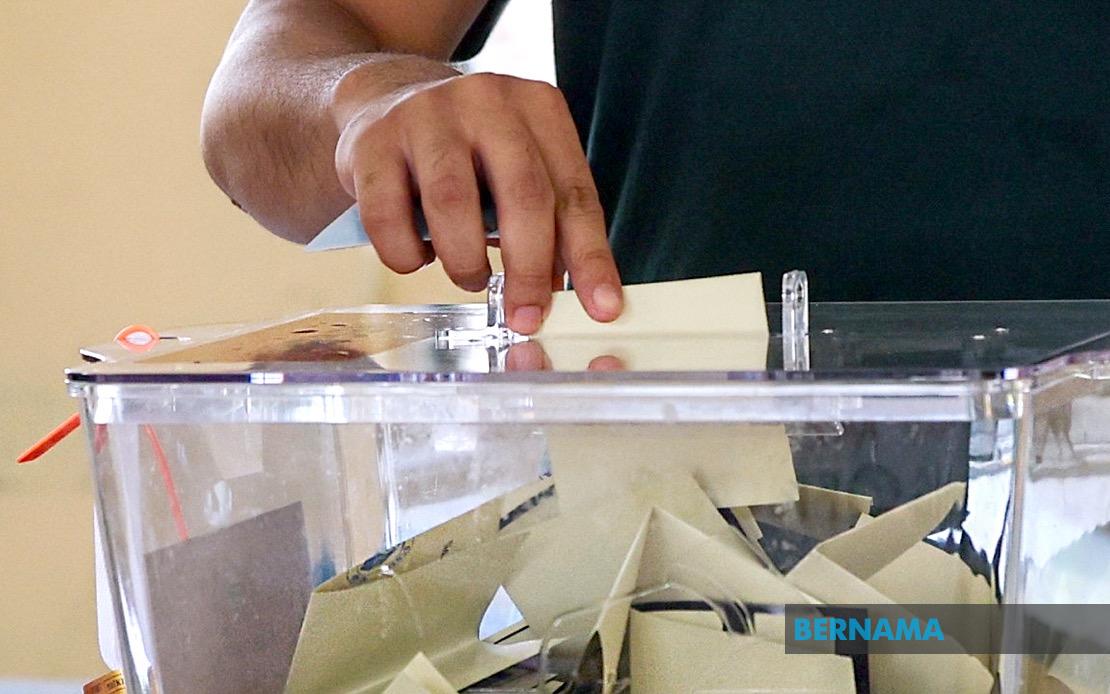
The 16th Johor state election delivered an unexpectedly bitter outcome for one voter who sacrificed considerable time and effort to participate in the democratic exercise. Rahmat Shukor, a 57-year-old self-employed businessman, found himself unable to cast his vote after a gruelling 120-kilometre drive from Batu Pahat to Johor Bahru ended exactly one minute past the official closing time at the SJK (C) Foon Yew 4 polling centre. What should have been a straightforward journey to exercise his constitutional right instead became a lesson in the unpredictability of Malaysian traffic patterns and the unforgiving nature of electoral deadlines.
Rahmat had not originally intended to vote on election day in Johor Bahru. His plan involved returning to the state capital on Friday to cast his ballot, and his family had executed this strategy successfully, with his wife and other relatives managing to vote without incident. However, exhaustion from his work in the plantation and contract sectors prompted him to remain at his late mother's house in Sri Medan, Batu Pahat, for one additional night. This decision, made for reasons of fatigue and familial proximity, would prove costly. When he finally set out on election day from the family residence, he was unaware that his departure time had left him with an increasingly narrow window to reach the polling centre before the mandatory 6pm closure.
The journey from Sri Medan to Johor Bahru typically covers a manageable distance, but on election day the roads proved far from typical. Rahmat encountered unusually severe congestion beginning at the Simpang Renggam Rest and Recreation Area, a major junction point on the North-South route towards Sedenak. This bottleneck cascaded into subsequent delays along the main Skudai road corridor, where traffic volume had evidently swelled beyond normal capacity. Rather than accepting the gridlock on his primary route, Rahmat attempted to navigate around the congestion by exploring alternative paths through the network of roads connecting Batu Pahat to Johor Bahru. Despite these efforts to find faster passages, the traffic situation proved too pervasive, and each diversion consumed additional minutes that he could ill afford to lose.
When Rahmat finally arrived at SJK (C) Foon Yew 4, his frustration was palpable but his documentation was thorough. He possessed photographic evidence of the traffic conditions that had delayed him, and he informed polling officials of his circumstances, presenting proof of the jam that had thwarted his arrival. However, the regulations governing Malaysian elections are deliberately rigid regarding voting timelines. Poll closing times exist to establish definitive boundaries between the voting period and the counting process, and election officials cannot exercise discretion to accommodate even the most sympathetic cases of lateness. Sixty seconds beyond the deadline, no matter the cause or justification, rendered his ballot ineligible. The procedural inflexibility that protects electoral integrity provided no mercy for individual misfortune.
Rahmat's situation highlights a persistent tension within democratic systems between procedural consistency and human circumstance. Malaysian electoral administration relies upon clear, unambiguous rules that apply universally to all voters, regardless of their personal situations. These rules exist for sound reasons: any allowance for exceptions based on individual hardship could theoretically open avenues for manipulation, selective enforcement, or disputes about what constitutes legitimate delay. At the same time, the story underscores the real consequences that can flow from external factors entirely beyond a voter's control, particularly in a nation where traffic congestion has become an endemic feature of urban and suburban life. The question of whether election authorities should possess mechanisms to accommodate voters delayed by documented, systemic infrastructure failures remains pertinent for policy discussions.
The broader context of this election day shows the scale of Johor's electoral exercise. The 16th state election involved 1,076 polling centres distributed across the entire state, all operating on identical timelines. Managing such a vast logistical undertaking requires standardised procedures and firm adherence to schedules. Allowing flexibility in closing times could cascade into complications for the counting process, which typically begins immediately after polls close and extends late into the evening. Election officials across all 1,076 centres must close their doors simultaneously to maintain the integrity of the tabulation and prevent accusations of impropriety regarding the sequencing of results from different constituencies.
For Rahmat personally, the disappointment cut deeper than a mere civic disappointment. His family members had successfully participated in the election, making him the sole family member unable to exercise his franchise. This distinction highlighted his loss within the context of those closest to him. He acknowledged his sadness and expressed his sense of let-down to observers outside the polling centre, his emotions raw in the immediate aftermath of his exclusion. Yet in the face of this frustration, Rahmat demonstrated a perspective that many voters in such situations might struggle to maintain. Despite his clear disappointment about missing the deadline, he expressed acceptance of the outcome and voiced hope that the democratic process would proceed smoothly regardless of his individual misfortune.
This incident invites consideration of the broader electoral experience for voters across Malaysia, particularly those who do not reside in their constituencies. Spousal separation for employment purposes is common in Malaysia's modern economy, with many workers based in major urban centres while maintaining registered voter status in their hometowns. The requirement to travel to one's registered polling centre places a burden that urban-based, working-class voters disproportionately bear. Batu Pahat to Johor Bahru represents a significant but not extraordinary distance within Malaysian geography, yet that distance translated into an insurmountable obstacle when combined with traffic congestion that nobody could have anticipated or prevented.
The election authorities' strict adherence to closing times, while procedurally necessary, also reflects the practical challenges that Malaysian infrastructure presents. Heavy traffic on major routes is not an exceptional circumstance but rather an expected feature of movement across the country during periods of high demand. Election day, when citizens make journeys specifically to fulfil their democratic obligations, naturally generates additional traffic beyond normal patterns. Whether election commissions should factor infrastructure realities into their planning, perhaps by extending voting hours in areas historically prone to congestion or by opening additional polling centres in high-demand zones, represents a policy question worth examining.
Rahmat's experience also raises awareness among potential voters about the absolute necessity of arriving well before closing times. The dramatic narrative of a 120-kilometre journey ending in exclusion serves as a cautionary tale for voters who might assume they have ample time to reach their polling centres. Election day congestion can strike unexpectedly, and the margin for error shrinks rapidly as closing time approaches. For those voting outside their immediate residential areas, arriving hours rather than minutes before the deadline provides essential buffer against the very real possibility of unforeseen delays.
Looking forward, this incident may prompt discussions within Johor's electoral administration about whether any procedural adjustments could accommodate such situations without compromising electoral integrity. Some jurisdictions have explored solutions such as provisional ballots for voters who can document that they arrived after closing but through no fault of their own, though implementing such systems requires careful legislative consideration. Others have expanded early voting periods, allowing voters to cast ballots across multiple days rather than concentrating the entire exercise into a single polling day. Malaysia's electoral framework has traditionally favoured the single-day model, but demographic shifts and urban expansion may warrant reconsideration of whether this approach remains optimal.
For Rahmat Shukor, the lesson learned came at considerable personal cost. His acceptance of the outcome and his hope for the democratic process to proceed smoothly demonstrate a mature civic perspective, even in disappointment. His story, however, transcends his individual circumstance. It encapsulates the friction between rigid procedural rules necessary for electoral administration and the unpredictable realities of modern Malaysian life. It illustrates the particular challenges faced by voters who have migrated from their registered constituencies for work or family reasons. And it serves as a reminder that electoral access, while guaranteed in principle to all Malaysian citizens, remains subject to practical constraints that not all voters can overcome, particularly those whose personal circumstances intersect with systemic infrastructure limitations.

