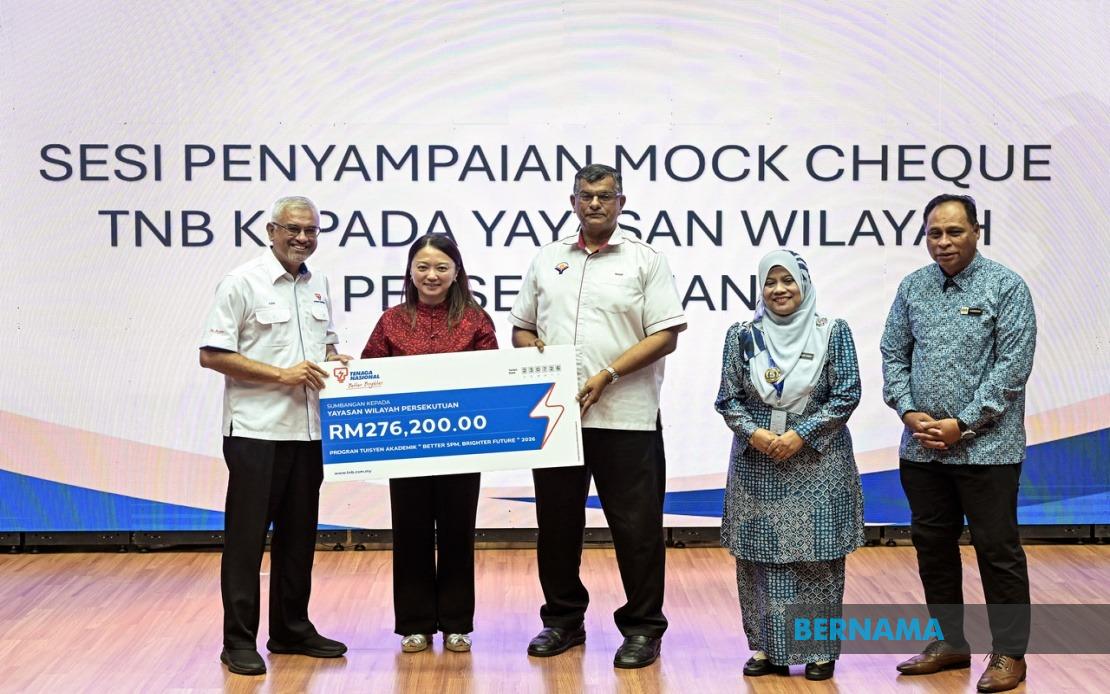
The Better SPM Brighter Future Programme has commenced operations across Kuala Lumpur, offering complimentary tuition to 1,600 Sijil Pelajaran Malaysia candidates enrolled in 40 secondary schools throughout the federal territory. The initiative, launched this month, represents a targeted effort to strengthen examination preparation among lower-income students by eliminating the financial barriers traditionally associated with private tuition classes.
Hannah Yeoh, who serves as both Minister in the Prime Minister's Department for the Federal Territories and chairman of Yayasan Wilayah Persekutuan, unveiled the programme at Sekolah Seni Malaysia Kuala Lumpur. Speaking at the launch event, she framed the initiative as a response to the growing pressure on Malaysian households, where external tuition fees have become a standard expense for families preparing children for major public examinations. By providing structured academic support at no cost, the programme seeks to level the educational playing field and reduce the socioeconomic disparities that often influence examination outcomes.
The financial backbone of this educational initiative comes from Tenaga Nasional Berhad, the national power utility, which contributed RM276,200 to Yayasan Wilayah Persekutuan specifically for programme implementation. This partnership between the private sector and government-linked institutions demonstrates a collaborative approach to addressing educational equity. The tuition classes are being coordinated through the Kuala Lumpur Federal Territories Education Department, ensuring alignment with official curriculum standards and examination requirements.
The curriculum focus remains deliberately narrow and strategically chosen, concentrating on four foundational subjects that form the backbone of the SPM examination: Bahasa Melayu, English, History, and Mathematics. This selective approach reflects careful prioritisation, as these subjects carry substantial weighting in overall SPM results and present particular challenges for many candidates. By concentrating resources on these core areas rather than spreading support too thinly, programme designers have maximised the potential impact on students' final examination performance.
The initiative carries particular significance for Kuala Lumpur's secondary students, many of whom come from diverse socioeconomic backgrounds. The federal territory includes populations ranging from affluent urban professionals to migrant workers and lower-income families, meaning that equitable access to examination preparation is not merely an educational luxury but a fundamental fairness issue. For families already managing tight household budgets, the elimination of tuition fees allows limited resources to be directed toward other essential needs while still ensuring their children receive quality academic preparation.
The timing of the programme's launch reflects ongoing policy discussions within Malaysia's education sector regarding accessibility and quality. National examination results continue to influence individual life trajectories significantly, affecting university placement, scholarship eligibility, and employment prospects. By intervening at the secondary school level through targeted tuition support, policymakers acknowledge that examination performance remains a critical gateway in Malaysia's education system and that financial constraints should not be permitted to compromise students' chances of success.
Yeoh's commentary on the programme extended beyond the immediate educational benefits, touching on broader themes of public responsibility and behavioural standards. She referenced recent incidents at Dataran Merdeka following major sporting events, noting that environmental cleanliness and civic responsibility represent values that must be modelled by adults and reinforced through public education. Her remarks, which some initially interpreted as criticism of specific parties, were reframed as part of a wider agenda to promote conscious citizenship and personal accountability regarding shared public spaces.
The minister emphasised that Kuala Lumpur City Hall remains committed to maintaining Dataran Merdeka as an accessible public recreation facility. This position reflects a balance between encouraging public use of iconic national spaces and establishing expected standards for behaviour and environmental stewardship. The framing suggests that public spaces require active management not just through cleaning services, but through cultivating a culture where citizens themselves take responsibility for maintaining shared facilities.
For Malaysian education policy broadly, the Better SPM Brighter Future Programme exemplifies a shift toward targeted intervention rather than universal subsidies. Rather than attempting to provide free tuition to all secondary students across the country, the federal territories government has concentrated resources on SPM candidates—the cohort facing the most consequential examination—within a defined geographic area. This approach, if successful, could potentially be replicated in other states and federal territories, creating a template for state-level educational initiatives.
The programme's success will depend significantly on implementation quality and student engagement. Free tuition classes are only effective if they attract serious participants and deliver teaching that genuinely improves examination performance. Schools and the Education Department will need to monitor attendance rates, track grade improvements, and gather feedback from both students and teachers to assess whether the investment translates into measurable educational outcomes. Should the programme demonstrate positive results, it may strengthen the case for expanded educational support initiatives.
From a broader regional perspective, Malaysia's approach to examination-related inequality mirrors challenges faced across Southeast Asia, where private tuition markets have become dominant features of education systems and sources of significant household expense. Countries throughout the region grapple with similar questions about how to ensure equitable access to quality preparation for high-stakes examinations. Malaysia's initiatives to provide free tuition may offer valuable lessons and potential models that other Southeast Asian education systems could adapt to their own contexts and needs.
The programme also reflects acknowledgment within Malaysian government circles that education costs represent a genuine hardship for working-class families. Public education is theoretically free, yet the informal expectation that families supplement school learning with private tuition has created a de facto two-tiered system where those with financial resources receive superior examination preparation. By introducing government-funded tuition specifically targeting SPM candidates, policymakers are directly addressing this structural inequality and attempting to restore public education's original promise of equal opportunity.

